About Holden 48-215
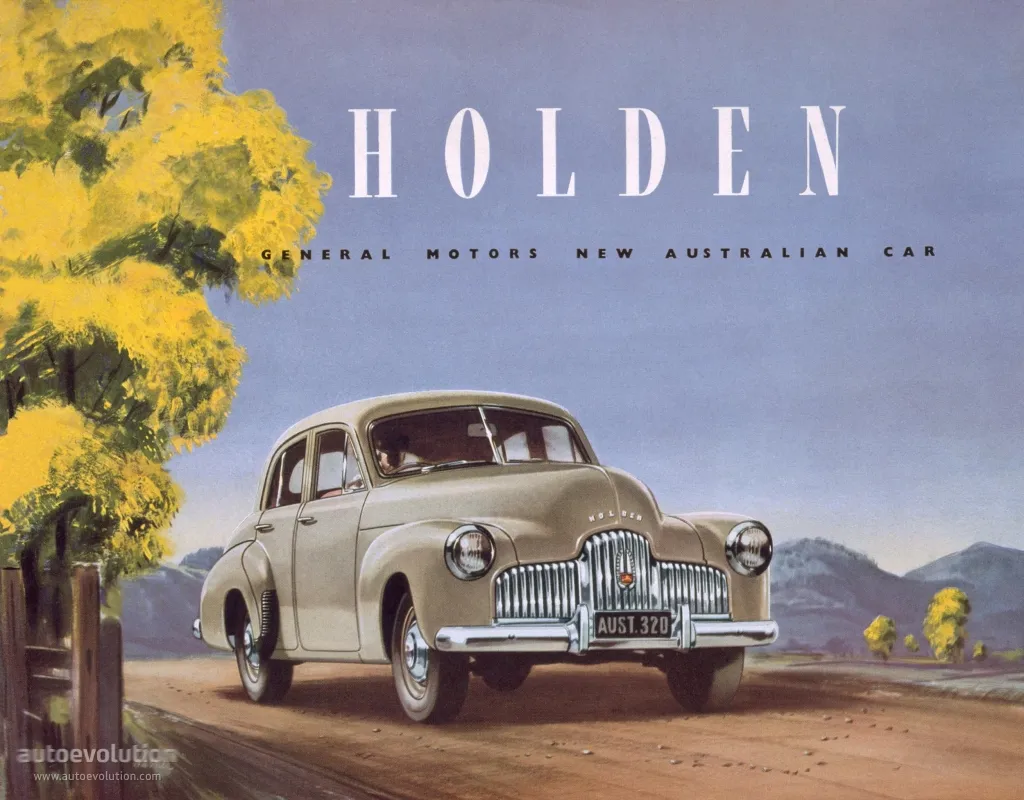
The 1948 48-215 was one of the most important vehicles in the Australian carmaker’s lineup since it was the first to boast the Holden’s badge, and it was the car that put Australians on wheels after WWII.
General Motors began the work on a small-sized sedan in 1944 while WWII was still ongoing. The design was spitting distance from the 1942 Chevrolet Fleetline, albeit in a smaller package. GM designed, engineered, and tested the car in Detroit before the first three prototypes were unloaded on Australian ground. Since there were no production facilities in Australia to produce the vehicle, the American automaker had to build a factory to make the engines and the rest of the components. But despite all odds, the car was finally launched on 9 November 1948 in the Fishermans Bend Social Hall in Melbourne. It had an unusual name even for those time standards, but it reflected the model year (1948) and the approximate engine size.
At the front, the 1948 Holden 48-215 impressed its customers with its Buick-inspired front grille with vertical slats and a taller mid-section. The wide front fenders sported round headlights with chromed trims surrounding them. Since Australia still had many unpaved roads where branches and other unwanted objects or animals were found, the automaker installed a metallic front bumper with a pair of vertical fins that flanked the license plate.
General Motors tried to make the car as light as possible to achieve better performance and lower running costs despite the small-sized engine. As a result, it created a unibody construction for the bodywork instead of the body-on-frame solution that was widespread among other vehicles, GM included. The tall nose of the car was followed by a split windshield with a pinned-out center section for improved aerodynamics. It was followed above by a curved roof. The front doors had a flat shape, while the rear ones were enlarged on the lower area to create a connection with the look of the rear quarter panels. At the back, GM installed a single taillight on the sloped-down trunk lid, thus reducing production costs. However, it didn’t make any compromises in terms of safety, so it added a solid metallic bumper with a chromed finish at the back.
Stepping inside the vehicle was a new experience for Australians who were used to high-mounted floors of body-on-frame cars. At the front, the automaker installed a bench seat wide enough to easily accommodate three adults. Fronting the driver was a rounded instrument cluster where the round speedometer took center stage. Below it, the automaker placed the gauges for the fuel level and the coolant temperature. The 1948 Holden 48-215 featured bench seats and enough room and comfort for six passengers. Unfortunately, it wasn’t available with a heater or defogging. General Motors tried to make the car as light as possible, and the result was impressive for those times.
Under the hood, the automaker installed an inline-six engine that produced a mere 60 PS (59 hp). Holden paired it with a three-speed manual gearbox featuring a steering column mounted gearstick. The lack of suspension and other comfort amenities didn’t matter too much for Australians, who could finally boast that they had a car manufacturer in the country.