About Holden FJ
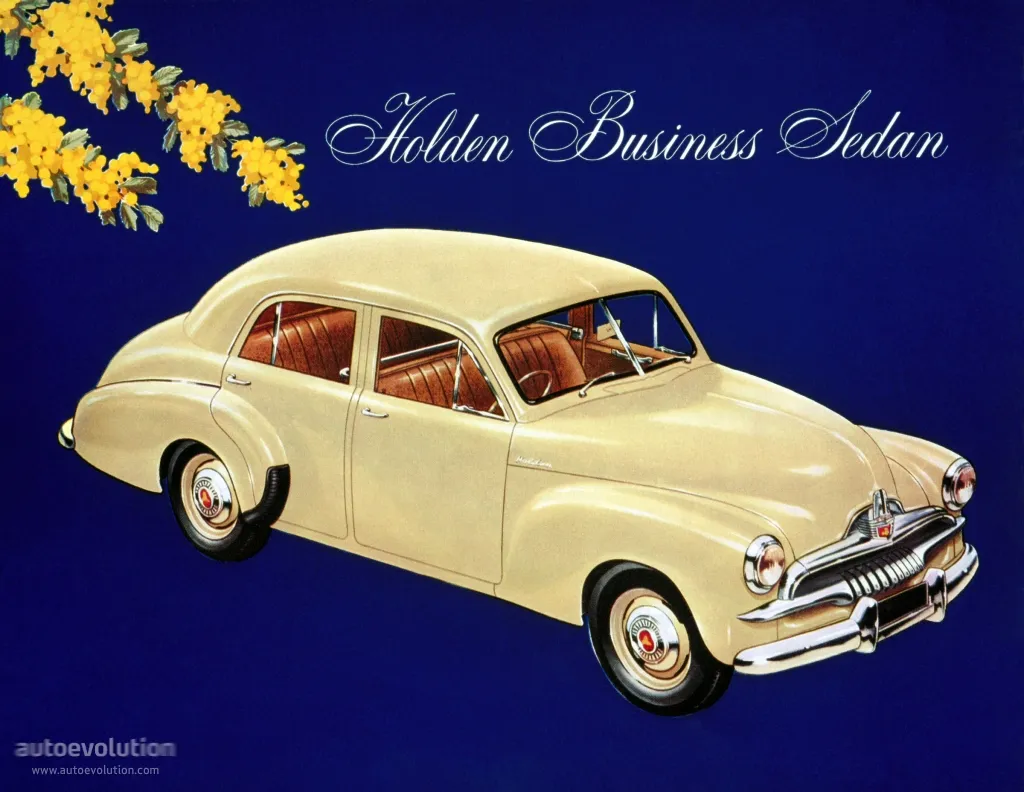
Holden introduced the FJ lineup in 1953 as a replacement for the 48-216 model, and it was based on a unibody construction, considered an advanced engineering solution for those times.
The Australian automaker upgraded and improved the previous model, the 48-216, which was also unofficially named the FX, and launched the FJ on a series production. Holden made about 170,000 units between 1953 and 1956 when the automaker replaced it with the much more modern FE lineup. The car still resembled its predecessor due to its styling, and it was available as a four-door sedan or as a utility vehicle called the Ute. It was considered the first Australian’s own vehicle, even though it was more or less a facelifted version of the 48-216 lineup.
At the front, the 1953 Holden FJ impressed its customers with the tall hood compared to the fenders, where the automaker placed the round headlights surrounded by chromed trims. Unlike the 48-216, the FJ featured a broad grille with just a small upper air intake, both being chromed-finished. The automaker knew that the harsh Australian unpaved roads were often cluttered with branches and other obstacles, so it installed two metallic bumpers that protected both the lower side of the front fascia and the radiator’s grille.
From its profile, the car resembled the 1948 Chevrolet Stylemaster, albeit in a smaller package. Its flat front doors featured chromed door handles, while those in the back had a large curved area that continued on the rear quarter panels. The split windshield helped customers lower repair costs if one of the glass panels was hit by road debris or stones and the greenhouse was short. At the back, the sloped-down rear window was followed by a short and abrupt, sloped deck. Holden offered the car in either one color or a two-tone scheme, depending on the grade. Customers could choose between three trim levels: Business (mostly taxis), Standard, and Special.
Inside, depending on the grade, the 1953 Holden FJ was available in a single color or in a two-tone scheme for the door cards and the bench seat upholstery. However, the dashboard came just in one, with metallic panels and a rounded-shaped instrument cluster fronting the driver. There, the automaker placed a big round dial for the speedometer flanked on its lower side by the fuel level and the coolant temperature gauges. To start the car, drivers had to turn on the ignition and then push a button. The automaker installed a pair of bench seats in the car, thus providing room for up to one driver and five other passengers.
Under the hood, Holden installed an inline-six engine paired with a three-speed manual gearbox. The gear stick was on the steering column, on the driver's left side. One of the most crucial upgrades for the 1953 Holden FJ was its rear suspension, which featured shock absorbers, a first for the Australian brand.