

About Mazda Capella RX-2
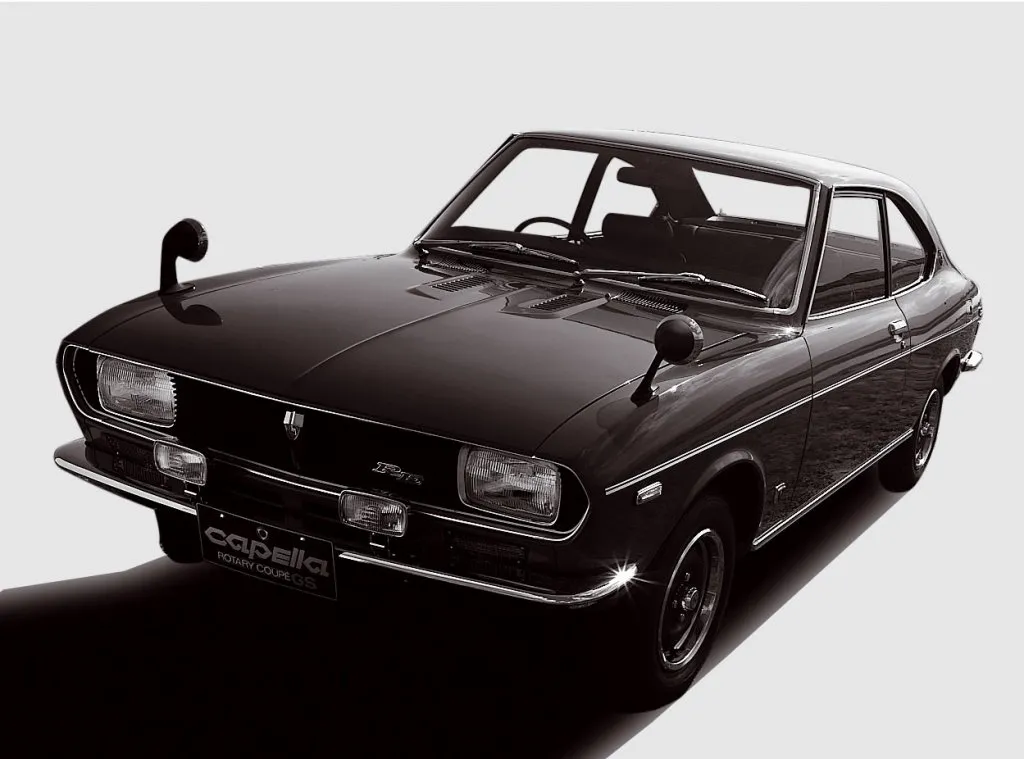
Mazda introduced the Capella in 1970, and besides the inline-four versions, it also made it with a Wankel rotary engine that wore the RX-2 nameplate.
In Japan, vehicles with engines larger than 1.5 liters suffered from tax penalties. So, Mazda came up with the idea of installing a rotary engine under the Capella’s hood. This powerplant was developed by the German engineer Felix Wankel, and instead of using pistons that went up and down into the cylinders, it featured a different system. As a result, the RX-2 could provide the power of a larger engine but still be considered as a 1.3-liter powerplant. Mazda made the RX-2 either as a coupe or a sedan, which helped the automaker increase its sales, especially among young customers.
Both versions of the Capella/RX-2 sported the same front fascia fitted with rectangular or four round headlamps, depending on the market. They flanked a horizontally slatted grille where a vertical chromed trim adorned by a triangular-shaped indent took center stage. That reflected the Wankel’s rotary piston that spun inside the engine. Between the headlights and the chromed metallic bumper, the automaker installed the rectangular lamps of the blinkers. Two additional narrow grilles flanked the bumper above and below it.
The RX-2’s profile revealed a coupe-shaped vehicle sporting a short front end, a panoramic windshield, and a cabin that featured a sloped-down rear window. Even though it looked more like a fastback, the RX-2 Coupe was a two-door sedan. Its four-door sibling had a different rear end, with a more conventional look for the greenhouse. Both versions featured blinkers on the front fenders and chromed flush door handles. A curved line over the rear quarter panels evoked the coke-bottle styling of the American muscle cars of the ‘60s, even though that era was almost gone when the Capella/RX-2 appeared on the market. Finally, at the back, European-inspired twin round taillights mounted on the sides tried to create a sportier look for the vehicle.
Inside, the automaker installed two bucket seats up front and a bench seat in the back. Customers had the option to get the vehicle with cloth or vinyl upholstery. In front of the driver, Mazda installed an instrument cluster with binocular-style dials. On the left was the speedometer, and on the right was the rev counter marked to 9,000 rpm (red-line at 6,500). These flanked three additional gauges mounted inside a round cluster, showing the coolant temperature, the fuel level, and the ammeter. The center console housed the gear stick. Mazda placed the controls for the ventilation system on the center console, while the radio was above it, on the dashboard, next to an analog clock.
Under the hood, the rotary engine was the main difference between the RX-2 and the Capella. According to those times standards, the twin-rotary Wankel unit was considered to have a 1.2-liter displacement. Even though it wasn’t the most powerful engine on the market, it was more potent than many larger engines that suffered from higher taxation.