Skip to content
AD

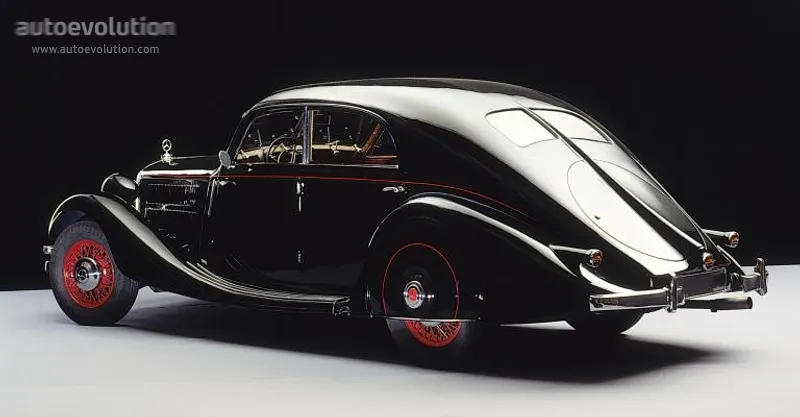
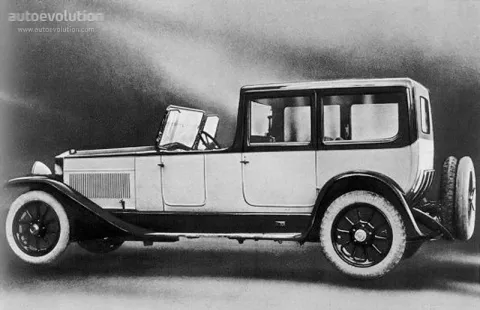
Mercedes-Benz Typ 320 "Autobahnkurier" (W142) 1938 (Unknown)

Mercedes-Benz · 1 trim

Mercedes-Benz Typ 320 "Autobahnkurier" (W142) 1938

The Mercedes-Benz Typ 320 "Autobahnkurier" (W142) 1938 (—) is available in 1 trims producing 78 to 78 hp. The fastest trim reaches 126 km/h. The lowest stated fuel consumption is 18.0 l/100 km.

Power
78 hp
0–100
Fuel economy
18.0 l/100 km
Cargo

Typ 320 "Autobahnkurier" (W142) 1938 Trims

Compare →
Trims and engine versions — Mercedes-Benz Typ 320 "Autobahnkurier" (W142) 1938
Trim Fuel Power Torque 0–100 Top speed Fuel economy CO2 Select
320 (3.4 L) Petrol 78 hp 218 Nm 126 km/h 18.0 l/100 km 427 g/km

Fuel economy and CO2 follow the stated test cycle. Manufacturer figures; deviations per market and option pack are possible.

Is Mercedes-Benz Typ 320 "Autobahnkurier" (W142) 1938 a good choice against other models?

Average across every Mercedes-Benz Typ 320 "Autobahnkurier" (W142) 1938 trim, compared with 29,871 trims of other cars from the all model years period.

Is Mercedes-Benz Typ 320 "Autobahnkurier" (W142) 1938 a good choice against other models?
Measure This model Average Position
Power 78 hp 189 hp
better than 8%
Torque 218 Nm 298 Nm
better than 36%
Top speed 126 km/h 205 km/h
better than 1%
Combined consumption 18.0 l/100 km 7.9 l/100 km
better than 1%
CO2 emissions 427 g/km 180 g/km
better than 1%
Unladen weight 1,950 kg 1,479 kg
better than 10%

Percentages show the share of trims from the same period this model beats on that measure. Manufacturer figures.

Not stated by the manufacturer: acceleration 0–100 km/h and cargo volume. Those measures are left out of the comparison.

Comparable models from other brands

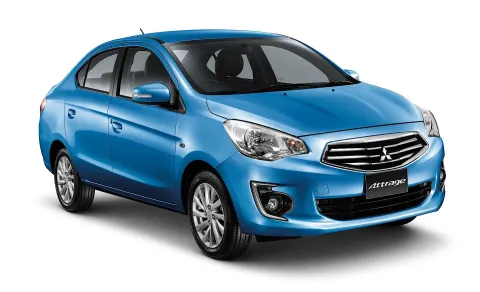
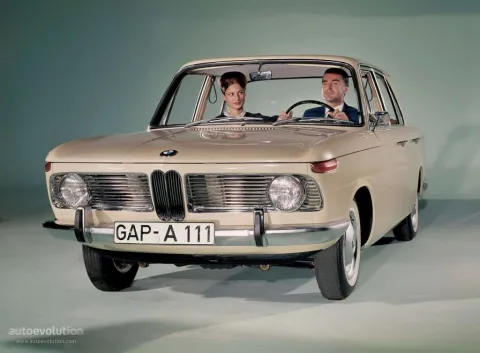
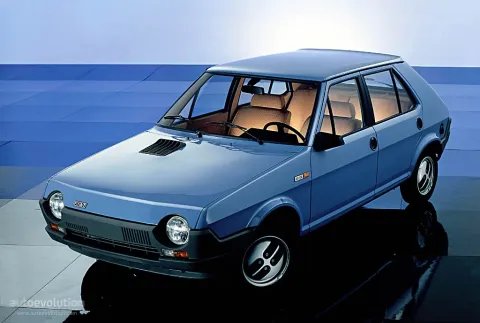
Mitsubishi BMW Fiat Renault Proton

About Mercedes-Benz Typ 320 "Autobahnkurier" (W142) 1938

The 1938 model of the W142 Typ 320 was the last evolution over the model 290. It featured improvements for comfort and high-speed efficiency.

The Typ 320 featured a 3.2-liter engine in the beginning, in February 1937 when it was shown at the International Automobile and Motorcycle Exhibition in Berlin. With it, the brand closed a gap in the market between medium-sized vehicles and vehicles of the largest format. The four-door version with streamlined bodywork was suspected to be designed by Spohn, one of the most prolific aerodynamically-shaped bodywork builders in the era.

The initial 3.2-liter engine featured 12 counter-weights for the crankshaft, to reduce engine vibrations. The solution worked and the engine ran smoothly. The former updraught carburetor was replaced by two downdraught carburetors. The previously used 4-speed transmission with overdrive function (it was, actually a three-speed gearbox), was replaced by a fully synchronized 4-speed gearbox supplied by ZF company. The fourth gear had a 1:1 gear ratio, which made the engine ran 26% lower than the previous version, at the same speed. That made the Typ 32 W142 IV faster and with a better fuel-efficiency. In late 1938, due to the shortage of high-octane fuel, the engine displacement was increased to 3.4-liter, in order to keep the same 78 hp.

The chassis featured an independent front suspension with a transverse leaf spring. At the top, the wheel was attached to a suspension arm that rested on a helical spring on the inside. The rear dual-joint swing axle had two helical springs on each side, one behind the other. Dual-action hydraulic lever-type dampers were installed on both front and rear axles.

How much power does the Mercedes-Benz Typ 320 "Autobahnkurier" (W142) 1938 have?

The most powerful Mercedes-Benz Typ 320 "Autobahnkurier" (W142) 1938 trim is the 320 (3.4 L) with 78 hp. The model has 1 trims, starting at 78 hp.

What is the fuel consumption of the Mercedes-Benz Typ 320 "Autobahnkurier" (W142) 1938?

The most economical Mercedes-Benz Typ 320 "Autobahnkurier" (W142) 1938 trim is the 320 (3.4 L), with a stated combined consumption of 18.0 l/100 km and 427 g CO2 per km.

Other Mercedes-Benz models