Skip to content
AD

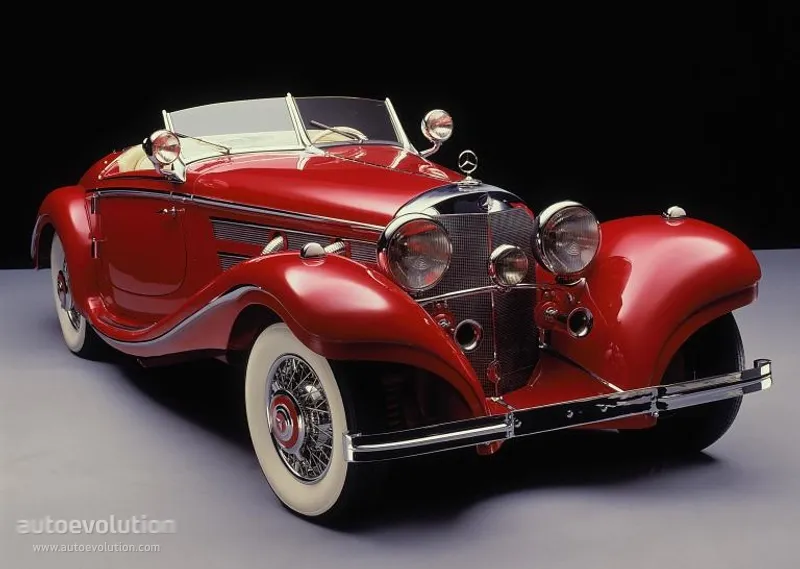
Mercedes-Benz Typ 500 K Spezial-Roadster (W29) 1936 (Unknown)

Mercedes-Benz · 1 trim

Mercedes-Benz Typ 500 K Spezial-Roadster (W29) 1936

The Mercedes-Benz Typ 500 K Spezial-Roadster (W29) 1936 (—) is available in 1 trims producing 160 to 160 hp. The fastest trim reaches 161 km/h. The lowest stated fuel consumption is 27.0 l/100 km.

Power
160 hp
0–100
Fuel economy
27.0 l/100 km
Cargo

Typ 500 K Spezial-Roadster (W29) 1936 Trims

Compare →
Trims and engine versions — Mercedes-Benz Typ 500 K Spezial-Roadster (W29) 1936
Trim Fuel Power Torque 0–100 Top speed Fuel economy CO2 Select
500 Kompressor Petrol 160 hp 161 km/h 27.0 l/100 km 643 g/km

Fuel economy and CO2 follow the stated test cycle. Manufacturer figures; deviations per market and option pack are possible.

Is Mercedes-Benz Typ 500 K Spezial-Roadster (W29) 1936 a good choice against other models?

Average across every Mercedes-Benz Typ 500 K Spezial-Roadster (W29) 1936 trim, compared with 29,871 trims of other cars from the all model years period.

Is Mercedes-Benz Typ 500 K Spezial-Roadster (W29) 1936 a good choice against other models?
Measure This model Average Position
Power 160 hp 189 hp
better than 52%
Top speed 161 km/h 205 km/h
better than 9%
Combined consumption 27.0 l/100 km 7.9 l/100 km
better than 0%
CO2 emissions 643 g/km 180 g/km
better than 0%

Percentages show the share of trims from the same period this model beats on that measure. Manufacturer figures.

Not stated by the manufacturer: torque, acceleration 0–100 km/h, cargo volume and unladen weight. Those measures are left out of the comparison.

Comparable models from other brands

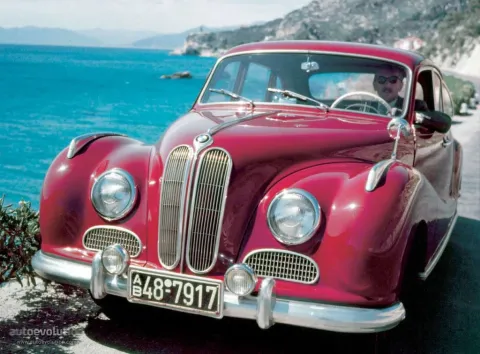
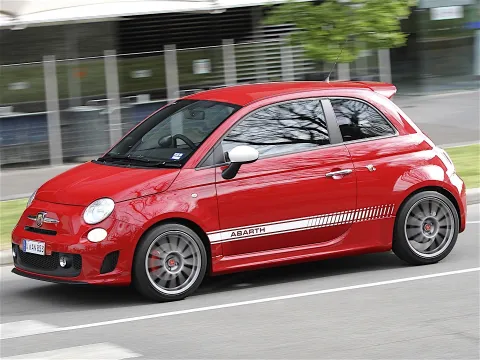
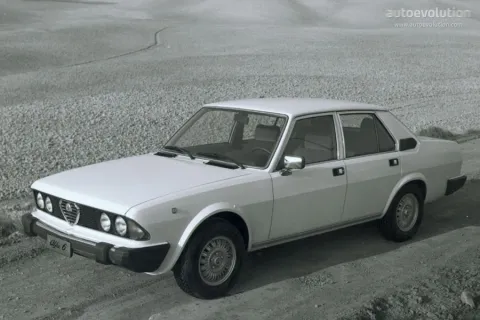
BMW Mazda MG Fiat Alfa Romeo

About Mercedes-Benz Typ 500 K Spezial-Roadster (W29) 1936

The 500 K Special Roadster was one of the fastest cars from its times a customer could buy from Mercedes-Benz, and it became a cult car over the years.

In 1934, Mercedes-Benz started to replace the previous 380 model with a new generation and unveiled the 500, W29 range. By enlarging the bore and lengthening the engine's stroke, the 3.8-liter inline-eight engine grew to five liters. To further increase the power, Mercedes added a Roots supercharger with a switch on the dashboard.

The new chassis allowed the carmaker to create a long bodywork with only two seats in the cabin and two rumble seats in the back, the so-called "mother-in-law" seats by the Germans. The front of the car showed the rear-set engine position, meaning that the powerplant was installed behind the front axle. Even the pinned-out radiator sat behind the wheels hubs. The carmaker added a thick, rigid front bumper extended in front of the wheel fenders. It was a so-called "Autobahn-Kurierwagen" that described the cars built for sustained high-speed travels. A two-part, raked windshield protected the occupants from the wind. Behind the cabin, on the sloped rear end, the carmaker installed two spare wheels. One was in a special compartment covered by a lid. When both wheels were installed, that lid was removed, and the second spare came on top.

Mercedes-Benz installed rear-hinged doors to access the luxurious cabin. The leather upholstery and the wood panels were finished to perfection. A big, four-spoke steering wheel ensured the driver that it had the best possible control over the car.

Under the long hood, Mercedes-Benz installed a long engine and two additional horns. The supercharger increased the power from 100 hp to 160 hp at a touch of a button. The carmaker paired the inline-eight unit with a semi-automatic four-speed gearbox. Shifting from third to fourth didn't require the use of the clutch.

How much power does the Mercedes-Benz Typ 500 K Spezial-Roadster (W29) 1936 have?

The most powerful Mercedes-Benz Typ 500 K Spezial-Roadster (W29) 1936 trim is the 500 Kompressor with 160 hp. The model has 1 trims, starting at 160 hp.

What is the fuel consumption of the Mercedes-Benz Typ 500 K Spezial-Roadster (W29) 1936?

The most economical Mercedes-Benz Typ 500 K Spezial-Roadster (W29) 1936 trim is the 500 Kompressor, with a stated combined consumption of 27.0 l/100 km and 643 g CO2 per km.

Other Mercedes-Benz models