About Nissan Cube
Nissan launched the third generation of the Cube in late 2008 at the Los Angeles Auto Show and tried to convince people that an unusual-looking vehicle might be a great idea when they need to spend more time in a car while stuck in traffic.
The Japanese automaker had great experience in producing small-sized vehicles. In Japan, they mastered the art of creating kei-segment vehicles, and then they tried to sell them abroad, only larger. In 1998, the automaker made the first generation but didn’t keep it too long on the market since it replaced it with a second generation that came in 2002. That model didn’t last too long either since six years later, it was replaced by this: the third generation of the Cube, also known as the Z12 in the carmaker’s coding system.
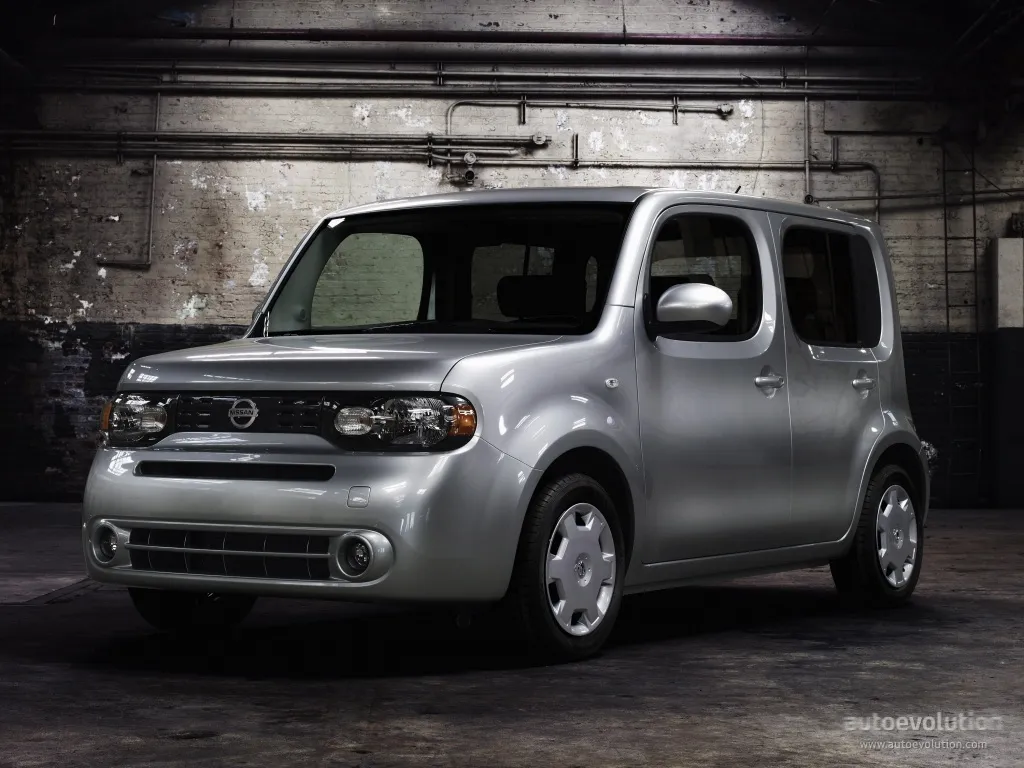
Creating a small vehicle with a large interior was never an easy job, but Nissan tried it anyway, but that led to some serious downturns for the Cube’s exterior. Its front fascia looked like it was wearing a mask that stretched over the headlights and the upper grille where the carmaker’s badge took center stage. The bumper was unusually tall for such a vehicle and sported an additional gap and a lower grille to help cool the engine. In addition, Nissan offered a pair of fog lamps that flanked the apron as an option.
From its profile, the Cube looked like a cube with a short front overhang followed by a short and flat hood and a steep windshield. The tall greenhouse was available with a panoramic glass panel above the front passengers, while behind the rear seats, a vertical drop followed for the tailgate. Nissan installed wide and tall doors that eased ingress and egress to the vehicle and softened all the windows’ corners. Finally, at the back, the car sported a thicker pillar on the driver’s side and a wrapped-around rear window.
Inside, Nissan created a very relaxing cabin inspired by a jacuzzi. There were plenty of storage areas, and thanks to the tall seating position, there was also enough legroom for adult-sized passengers. Its waved-shape dashboard offered several storage areas, including two cup holders on the driver’s side. Nissan made the Cube available with either a bench seat or two bucket seats at the front and a bench seat in the back. To cover the panoramic glass roof, the automaker offered a paper-made sun shade that let the cabin be flooded with enough light but no heat. Behind the rear seats, the Cube featured a small trunk that was good enough for two bags of groceries.
Since it shared its platform with the Nissan Micra, the Cube was available with a choice of two engines inherited from its sibling: a 1.5- and a 1.6-liter gasoline engine. Both versions were paired with either a CVT for the former or a five-speed manual for the latter.