Skip to content
AD

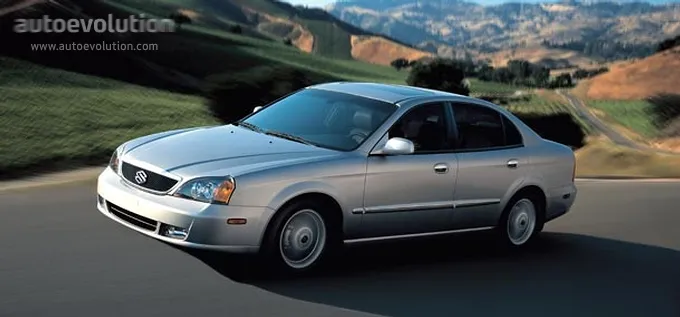
Suzuki Verona (2004 - 2006)

Suzuki · 3 trims

Suzuki Verona

The Suzuki Verona (2004 - 2006) is available in 3 trims producing 116 to 156 hp. The fastest trim reaches 200 km/h. The lowest stated fuel consumption is 8.8 l/100 km.

Power
156 hp
0–100
9.8 s
Fuel economy
8.8 l/100 km
Cargo
379 l

Verona Trims

Compare →
Trims and engine versions — Suzuki Verona
Trim Fuel Power Torque 0–100 Top speed Fuel economy CO2 Select
2.0L 4AT FWD (116 HP) Petrol 116 hp 240 Nm 190 km/h
2.0L 4AT FWD (131 HP) Petrol 131 hp 181 Nm 9.8 s 200 km/h
2.5L 4AT FWD (156 HP) Petrol 156 hp 240 Nm 9.8 s 200 km/h 8.8 l/100 km

Fuel economy and CO2 follow the stated test cycle. Manufacturer figures; deviations per market and option pack are possible.

Is Suzuki Verona a good choice against other models?

Average across every Suzuki Verona trim, compared with 6,458 trims of other cars from the 2001–2007 period.

Is Suzuki Verona a good choice against other models?
Measure This model Average Position
Power 134 hp 176 hp
better than 37%
Torque 220 Nm 277 Nm
better than 39%
Top speed 197 km/h 205 km/h
better than 44%
Acceleration 0–100 km/h 9.8 s 10.0 s
better than 51%
Combined consumption 8.8 l/100 km 8.2 l/100 km
better than 32%
Cargo volume 379 l 492 l
better than 37%
Unladen weight 1,496 kg 1,461 kg
better than 41%

Percentages show the share of trims from the same period this model beats on that measure. Manufacturer figures.

Not stated by the manufacturer: co2 emissions. Those measures are left out of the comparison.

Comparable models from other brands

Chevrolet Fiat Jeep Qoros Volvo

About Suzuki Verona

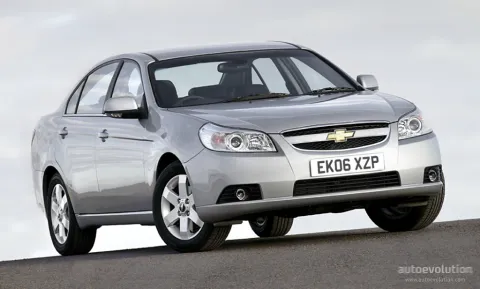
Suzuki needed a larger vehicle, and, since GM had a good offer for a badge-engineered car, it took the opportunity and launched the Verona in 2004 as a twin-brother for the Chevrolet Evanda.

Not everything that Daewoo had in its portfolio was good for scrap metal. It had a good platform that evolved into GM's Gamma II base and the one used before for the Daewoo Leganza, which was transformed into Chevrolet Evanda in 2004. With a design signed by Italdesign Giugiaro studio, the mid-size sedan tried to convince customers that it was a good bet.

Just like its badge-engineered sibling from GM, the Verona was penned by Giugiaro. The main difference, though, was the front fascia, where the bow-tie badge supported by a horizontal slat was replaced by a mesh grille with Suzuki's big chromed S emblem. The mix of curved surfaces and sharp lines defined the car and formed an elegant-looking sedan. But there were still some shapes that resembled the older Leganza, and those were not trendy anymore.

Thanks to its ample wheelbase, the Verona provided a roomy interior suited for five adult-sized occupants. The front bucket seats were separated by a tall center console that hosted a storage compartment covered by an armrest. Just to get more attention, Suzuki offered many amenities as standard. It even provided the same 6-CD in-dash changer that Daewoo developed, and it was also installed by Chevrolet.

Since Suzuki didn't have any suitable engine for this kind of vehicle, it used Daewoo's 2.0-liter and 2.5-liter powerplants. It paired them with a four-speed automatic that was slow and sluggish. By 2007, the low sales figures convinced Suzuki that it was time to drop the car from its lineup.

How much power does the Suzuki Verona have?

The most powerful Suzuki Verona trim is the 2.5L 4AT FWD (156 HP) with 156 hp. The model has 3 trims, starting at 116 hp.

What is the fuel consumption of the Suzuki Verona?

The most economical Suzuki Verona trim is the 2.5L 4AT FWD (156 HP), with a stated combined consumption of 8.8 l/100 km and — g CO2 per km.

How quickly does the Suzuki Verona accelerate from 0 to 100 km/h?

The quickest trim is the 2.0L 4AT FWD (131 HP): 0-100 km/h in 9.8 seconds, with a top speed of 200 km/h.

How large is the cargo volume of the Suzuki Verona?

The largest stated cargo volume for the Suzuki Verona is 379 litres.

Other Suzuki models

Suzuki APV

2004 - present · 2 trims

Power
92 hp
0–100
Fuel economy
8.0

Petrol

Suzuki Reno

2004 - present · 2 trims

Power
129 hp
0–100
Fuel economy

Petrol

Suzuki XL7

2007 - 2009 · 2 trims

Power
252 hp
0–100
9.5 s
Fuel economy
11.2

Petrol

Suzuki Kizashi

2010 - present · 5 trims

Power
185 hp
0–100
7.8 s
Fuel economy
7.9

Petrol

Suzuki X-90

1996 - 1997 · 2 trims

Power
97 hp
0–100
13.3 s
Fuel economy
7.8

Petrol