Skip to content
AD

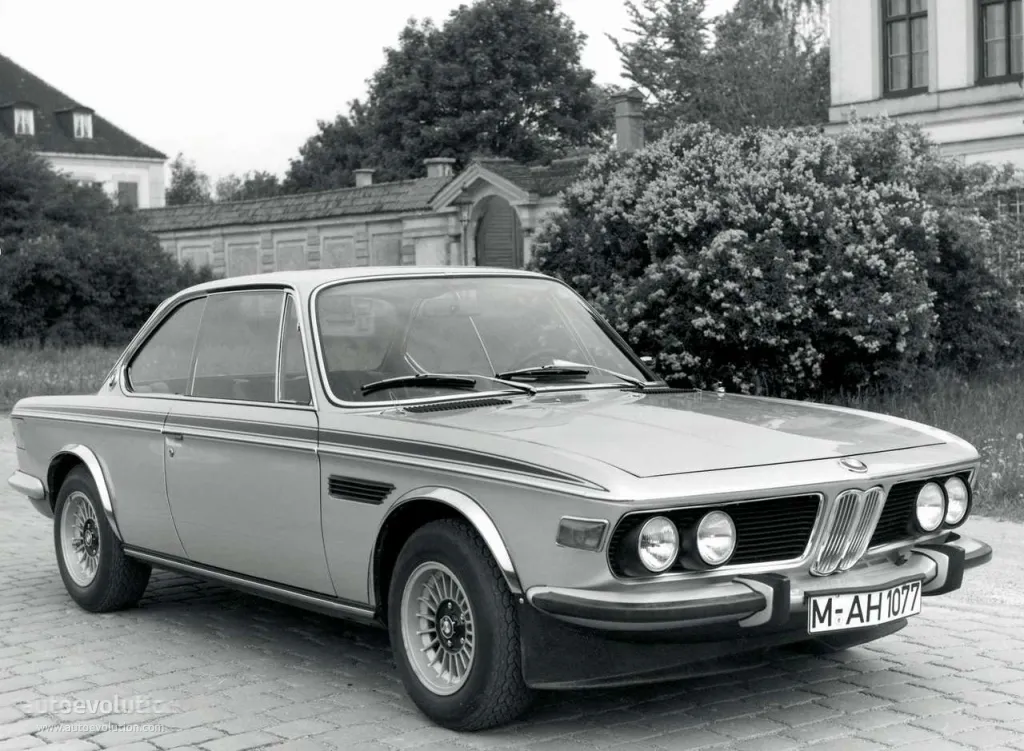
BMW 3.0 CSL (E9) (1971 - 1975)

BMW · 3 trims

BMW 3.0 CSL (E9)

The BMW 3.0 CSL (E9) (1971 - 1975) is available in 3 trims producing 180 to 205 hp. The fastest trim reaches 222 km/h. The lowest stated fuel consumption is 10.9 l/100 km.

Power
205 hp
0–100
6.9 s
Fuel economy
10.9 l/100 km
Cargo
450 l

3.0 CSL (E9) Trims

Compare →
Trims and engine versions — BMW 3.0 CSL (E9)
Trim Fuel Power Torque 0–100 Top speed Fuel economy CO2 Select
3.0L 4MT RWD (180 HP) Petrol 180 hp 255 Nm 7.3 s 212 km/h 11.2 l/100 km
3.0L 4MT RWD (200 HP) Petrol 200 hp 272 Nm 6.9 s 220 km/h 10.9 l/100 km
3.0L 4MT RWD (205 HP) Petrol 205 hp 286 Nm 7.1 s 222 km/h 10.9 l/100 km

Fuel economy and CO2 follow the stated test cycle. Manufacturer figures; deviations per market and option pack are possible.

Is BMW 3.0 CSL (E9) a good choice against other models?

Average across every BMW 3.0 CSL (E9) trim, compared with 459 trims of other cars from the 1968–1974 period.

Is BMW 3.0 CSL (E9) a good choice against other models?
Measure This model Average Position
Power 195 hp 158 hp
better than 74%
Torque 271 Nm 247 Nm
better than 68%
Top speed 218 km/h 180 km/h
better than 87%
Acceleration 0–100 km/h 7.1 s 12.6 s
better than 90%
Combined consumption 11.0 l/100 km 12.3 l/100 km
better than 44%
Cargo volume 450 l 352 l
better than 76%
Unladen weight 1,193 kg 1,268 kg
better than 54%

Percentages show the share of trims from the same period this model beats on that measure. Manufacturer figures.

Not stated by the manufacturer: co2 emissions. Those measures are left out of the comparison.

Comparable models from other brands

Mitsubishi Eagle Honda Lancia Kia Tesla

About BMW 3.0 CSL (E9)

The 3.0 CSL was the very first model designed and developed by BMW's Motorsport division. The 1971 BMW 3.0 CSL (Coupe Sport Lightweight) was based on the 3.0 CSi chassis & body and featured all-aluminum components, while being stripped of all 'unnecessary' trimmings or soundproofing systems.

This model was initially fitted with a 3.0L 6-cylinder inline engine delivering 180 hp that was later replaced (1973) by a more powerful 3.2L unit. The racing version of the 3.0 CSL received a high-performance 3.5L engine and a Getrag five-speed gearbox. The 3.0 CSL was lighter than its predecessor by around 400 lbs. The opening panels were made out of aluminum, and the steel panels were of a thinner gauge. The car did not have a front bumper and the rear bumper was a very light one, made of a black polyester. The power steering and the electric windows were removed as well.

This model was produced in about 785 units until its discontinuation in 1975. BMW 3.0 CSL's racing variant scored some historical wins in the 1973 ETCC championship (beating Ford Capri for both drivers' and manufacturers' title) or the 6-Hours of Nurburgring.

The CSLs were offered in four distinctive colors: Colorado, Golf, Inka and Verona. All of the models produced were left-hand-drive and were not sold in the UK.

How much power does the BMW 3.0 CSL (E9) have?

The most powerful BMW 3.0 CSL (E9) trim is the 3.0L 4MT RWD (205 HP) with 205 hp. The model has 3 trims, starting at 180 hp.

What is the fuel consumption of the BMW 3.0 CSL (E9)?

The most economical BMW 3.0 CSL (E9) trim is the 3.0L 4MT RWD (200 HP), with a stated combined consumption of 10.9 l/100 km and — g CO2 per km.

How quickly does the BMW 3.0 CSL (E9) accelerate from 0 to 100 km/h?

The quickest trim is the 3.0L 4MT RWD (200 HP): 0-100 km/h in 6.9 seconds, with a top speed of 220 km/h.

How large is the cargo volume of the BMW 3.0 CSL (E9)?

The largest stated cargo volume for the BMW 3.0 CSL (E9) is 450 litres.

Other BMW models

BMW 3.0 CSi

1971 - 1975 · 1 trim

Power
200 hp
0–100
7.6 s
Fuel economy
10.9

Petrol

BMW 2800 CS

1968 - present · 2 trims

Power
170 hp
0–100
8.4 s
Fuel economy
11.0

Petrol

BMW 1600

1966 - 1975 · 1 trim

Power
84 hp
0–100
13.0 s
Fuel economy
10.0

Petrol

BMW 2000 CS

1965 - 1969 · 1 trim

Power
120 hp
0–100
11.0 s
Fuel economy
10.9

Petrol