
Skip to content
AD

Bristol 603 S3 Brigand (1982 - present)

Bristol · 1 trim

Bristol 603 S3 Brigand

The Bristol 603 S3 Brigand (1982 - present) is available in 1 trims producing 172 to 172 hp. The fastest trim reaches 241 km/h.

Power
172 hp
0–100
6.1 s
Fuel economy
Cargo
541 l

603 S3 Brigand Trims

Compare →
Trims and engine versions — Bristol 603 S3 Brigand
Trim Fuel Power Torque 0–100 Top speed Fuel economy CO2 Select
5.9L V8 3AT (172 HP) Petrol 172 hp 6.1 s 241 km/h

Fuel economy and CO2 follow the stated test cycle. Manufacturer figures; deviations per market and option pack are possible.

Is Bristol 603 S3 Brigand a good choice against other models?

Average across every Bristol 603 S3 Brigand trim, compared with 878 trims of other cars from the 1979–1985 period.

Is Bristol 603 S3 Brigand a good choice against other models?
Measure This model Average Position
Power 172 hp 119 hp
better than 86%
Top speed 241 km/h 180 km/h
better than 96%
Acceleration 0–100 km/h 6.1 s 12.5 s
better than 99%
Cargo volume 541 l 461 l
better than 80%
Unladen weight 1,746 kg 1,178 kg
better than 6%

Percentages show the share of trims from the same period this model beats on that measure. Manufacturer figures.

Not stated by the manufacturer: torque, combined consumption and co2 emissions. Those measures are left out of the comparison.

Comparable models from other brands

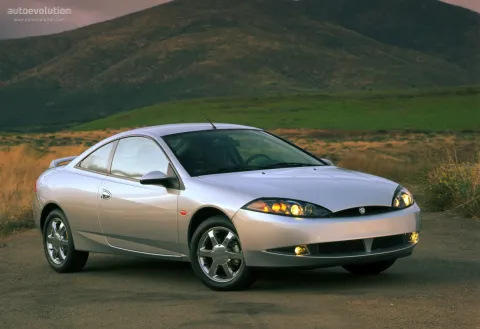
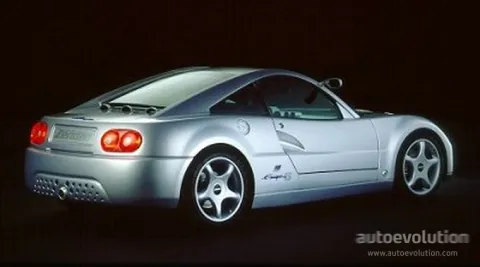
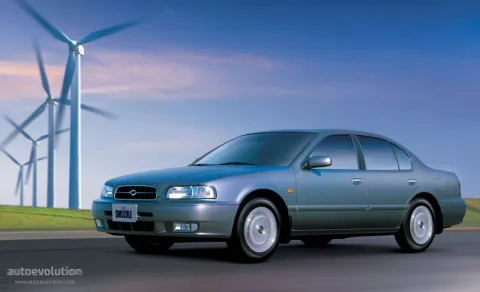
Mercury Lightyear Zender Samsung Nissan Bufori

About Bristol 603 S3 Brigand

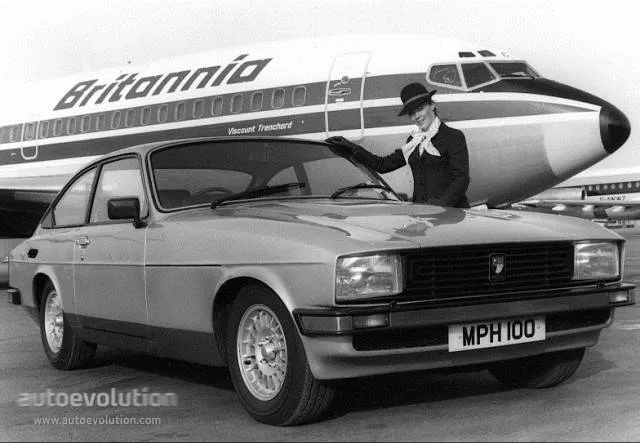
Bristol tried to get into the GT segment with a two-door coupe that offered more power than its siblings, thanks to an improved turbocharged V8.

Based on the same platform used by its Britannia sibling, the Brigand tried to be more attractive and provide surprising performance. But, unfortunately, the British automaker didn't make too many changes to the car in the following 12 years of production.

While it still relied on the same chassis developed by BMW in the '30s for the 327, the Brigand's exterior revealed a fresh look. Its front fascia sported a pair of Volkswagen Scirocco II headlights and a black plastic grille between them. In addition, the plastic bumper received a chromed trim interrupted only by the amber blinkers. From its profile, the two-door coupe was slightly longer than a Jaguar XJS, which was 603's, main competitor. Unlike the Britannia, the Brigand featured a bulge on the hood, which needed to accommodate a turbocharger.

Inside, the WWII-aircraft-inspired instrument panel was filled with dials and gauges. Although all of them were useful, sometimes customers complained that it was too much. But they didn't complain about the bucket seats at the front. In addition, the 114" (2.9-meter) long wheelbase allowed Bristol to offer enough legroom for the two passengers seated in the back. As expected from this exclusive British brand, the materials' quality was top-notch, using leather, wood, and polished metallic parts.

Under the hood, Bristol installed a 5.9-liter V8 carried from Chrysler. This was built according to the British automaker's requirements and was helped by a turbocharger. Thus, finally, the Brigand was a very fast GT. But, unfortunately, the automaker couldn't sell them in large numbers.

How much power does the Bristol 603 S3 Brigand have?

The most powerful Bristol 603 S3 Brigand trim is the 5.9L V8 3AT (172 HP) with 172 hp. The model has 1 trims, starting at 172 hp.

How quickly does the Bristol 603 S3 Brigand accelerate from 0 to 100 km/h?

The quickest trim is the 5.9L V8 3AT (172 HP): 0-100 km/h in 6.1 seconds, with a top speed of 241 km/h.

How large is the cargo volume of the Bristol 603 S3 Brigand?

The largest stated cargo volume for the Bristol 603 S3 Brigand is 541 litres.

Other Bristol models

Bristol Type 603

1976 - 1982 · 1 trim

Power
175 hp
0–100
8.8 s
Fuel economy

Petrol

Bristol 408

1963 - present · 1 trim

Power
253 hp
0–100
10.2 s
Fuel economy
20.3

Petrol

Bristol 407

1961 - 1963 · 1 trim

Power
253 hp
0–100
Fuel economy

Petrol

Bristol 406

1958 - 1961 · 1 trim

Power
107 hp
0–100
14.0 s
Fuel economy
12.0

Petrol