Skip to content
AD

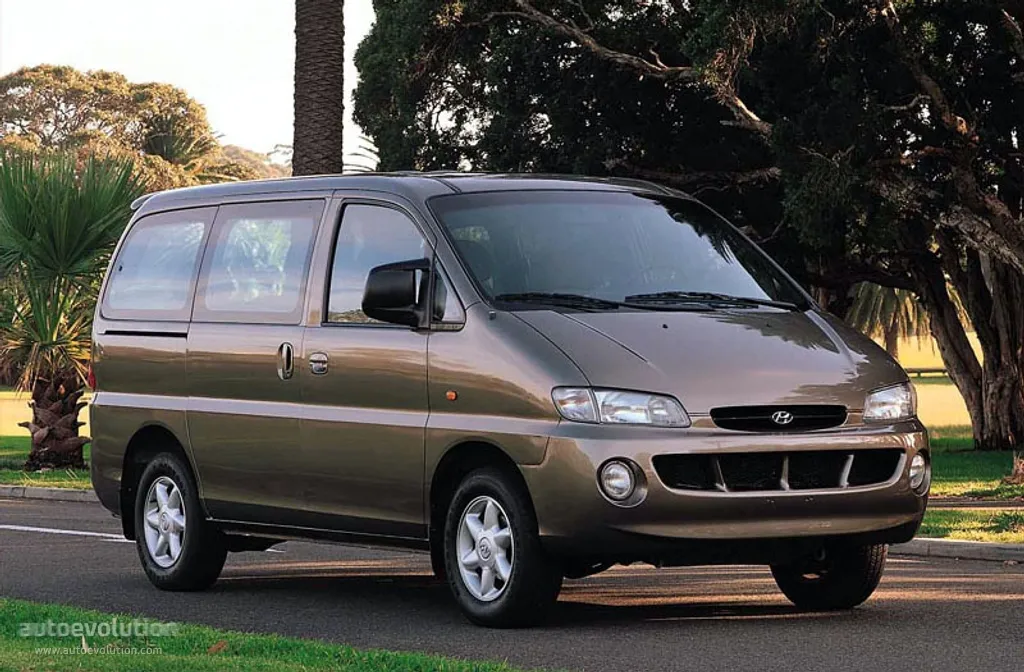
Hyundai Satellite (1997 - 2000)

Hyundai · 2 trims

Hyundai Satellite

The Hyundai Satellite (1997 - 2000) is available in 2 trims producing 80 to 111 hp. The fastest trim reaches 155 km/h. The lowest stated fuel consumption is 9.8 l/100 km.

Power
111 hp
0–100
20.6 s
Fuel economy
9.8 l/100 km
Cargo

Satellite Trims

Compare →
Trims and engine versions — Hyundai Satellite
Trim Fuel Power Torque 0–100 Top speed Fuel economy CO2 Select
2.5L TD 5MT FWD (80 HP) Petrol 80 hp 210 Nm 21.5 s 145 km/h 9.8 l/100 km 262 g/km
2.4i 5MT FWD (112 HP) Petrol 111 hp 181 Nm 20.6 s 155 km/h 12.5 l/100 km 298 g/km

Fuel economy and CO2 follow the stated test cycle. Manufacturer figures; deviations per market and option pack are possible.

Is Hyundai Satellite a good choice against other models?

Average across every Hyundai Satellite trim, compared with 3,692 trims of other cars from the 1994–2000 period.

Is Hyundai Satellite a good choice against other models?
Measure This model Average Position
Power 96 hp 147 hp
better than 23%
Torque 196 Nm 227 Nm
better than 46%
Top speed 150 km/h 197 km/h
better than 3%
Acceleration 0–100 km/h 21.1 s 11.2 s
better than 0%
Combined consumption 11.2 l/100 km 8.6 l/100 km
better than 13%
CO2 emissions 280 g/km 207 g/km
better than 9%
Unladen weight 1,794 kg 1,351 kg
better than 7%

Percentages show the share of trims from the same period this model beats on that measure. Manufacturer figures.

Not stated by the manufacturer: cargo volume. Those measures are left out of the comparison.

Comparable models from other brands

Proton Suzuki Mitsubishi Renault Opel

About Hyundai Satellite

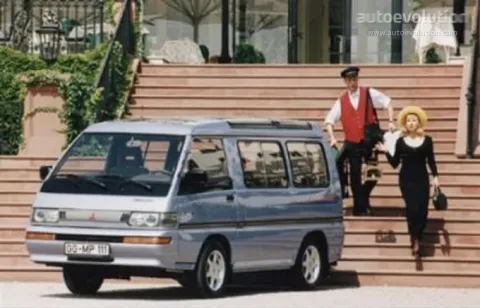
Also known as the H1 or Starex, the Hyundai Satellite was a light commercial vehicle built as an MPV as well by the Korean carmaker.

In 1997 Hyundai was still relying on its partnership with the Japanese carmaker Mitsubishi. Its partnership gave them access to new ideas, platforms, and engines. The Satellite was a rebadged version of the Mitsubishi Delica/L400/Space Gear, but it didn't feature all the drivetrains as its Japanese sibling.

From the outside, the passenger version featured a front fascia with narrow headlights and a small grille between them. The designers cut a wider opening through the bumper to ensure better engine cooling. The Satellite featured a sliding door on the curbside for the rear passengers and a big liftgate in the back to provide easy access to the trunk/cargo area.

Inside, the carmaker offered the Satellite a few seating options, with room for up to nine occupants, including the driver. Hyundai offered the minivan with a six-seat configuration and a passage-through the middle row to the back for more comfort. The lack of a sliding door for both sides was considered more of a sour point than a safety measure. For the driver, the carmaker installed a broad dashboard and a car-like instrument cluster. To enhance the driving experience, the car featured a floor-mounted gear-stick.

Hyundai installed two engine choices under the Satellite's hood. There were a 2.4-liter gasoline engine and a 2.5-liter turbodiesel. Over time, the vehicle received new engine choices, including a naturally aspirated 3.0-liter V6 gasoline unit. For specific markets, Hyundai offered the Satellite with an all-wheel-drive system.

How much power does the Hyundai Satellite have?

The most powerful Hyundai Satellite trim is the 2.4i 5MT FWD (112 HP) with 111 hp. The model has 2 trims, starting at 80 hp.

What is the fuel consumption of the Hyundai Satellite?

The most economical Hyundai Satellite trim is the 2.5L TD 5MT FWD (80 HP), with a stated combined consumption of 9.8 l/100 km and 262 g CO2 per km.

How quickly does the Hyundai Satellite accelerate from 0 to 100 km/h?

The quickest trim is the 2.4i 5MT FWD (112 HP): 0-100 km/h in 20.6 seconds, with a top speed of 155 km/h.

Other Hyundai models

Hyundai Matrix

2001 - 2010 · 6 trims

Power
122 hp
0–100
11.3 s
Fuel economy
6.0

Petrol Diesel

Hyundai Grandeur

2005 - 2011 · 3 trims

Power
235 hp
0–100
7.8 s
Fuel economy
7.9

Petrol Diesel

Hyundai Grand i10

2013 - present · 2 trims

Power
83 hp
0–100
Fuel economy

Petrol Diesel