Skip to content
AD

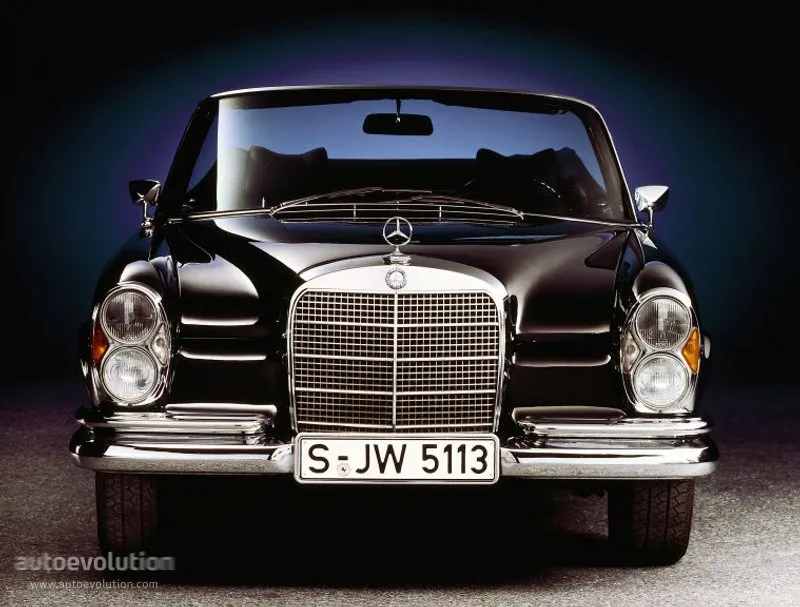
Mercedes-Benz Cabriolet (W111/112) (1961 - 1971)

Mercedes-Benz · 4 trims

Mercedes-Benz Cabriolet (W111/112)

The Mercedes-Benz Cabriolet (W111/112) (1961 - 1971) is available in 4 trims producing 120 to 200 hp. The fastest trim reaches 204 km/h. The lowest stated fuel consumption is 11.2 l/100 km.

Power
200 hp
0–100
9.4 s
Fuel economy
11.2 l/100 km
Cargo

Cabriolet (W111/112) Trims

Compare →
Trims and engine versions — Mercedes-Benz Cabriolet (W111/112)
Trim Fuel Power Torque 0–100 Top speed Fuel economy CO2 Select
220 SEb 4MT RWD (120 HP) Petrol 120 hp 192 Nm 13.7 s 171 km/h 11.2 l/100 km 267 g/km
250 SE 4MT RWD (150 HP) Petrol 150 hp 220 Nm 11.8 s 190 km/h 11.7 l/100 km 278 g/km
300 SE 4AT RWD (170 HP) Petrol 170 hp 250 Nm 11.4 s 195 km/h 13.0 l/100 km 309 g/km
300 SE 3.5L 4AT RWD (200 HP) Petrol 200 hp 290 Nm 9.4 s 204 km/h 13.5 l/100 km 321 g/km

Fuel economy and CO2 follow the stated test cycle. Manufacturer figures; deviations per market and option pack are possible.

Is Mercedes-Benz Cabriolet (W111/112) a good choice against other models?

Average across every Mercedes-Benz Cabriolet (W111/112) trim, compared with 152 trims of other cars from the 1958–1964 period.

Is Mercedes-Benz Cabriolet (W111/112) a good choice against other models?
Measure This model Average Position
Power 160 hp 163 hp
better than 55%
Torque 238 Nm 251 Nm
better than 56%
Top speed 190 km/h 176 km/h
better than 58%
Acceleration 0–100 km/h 11.6 s 12.8 s
better than 50%
Combined consumption 12.4 l/100 km 12.7 l/100 km
better than 46%
Unladen weight 1,613 kg 1,307 kg
better than 23%

Percentages show the share of trims from the same period this model beats on that measure. Manufacturer figures.

Not stated by the manufacturer: cargo volume. Those measures are left out of the comparison.

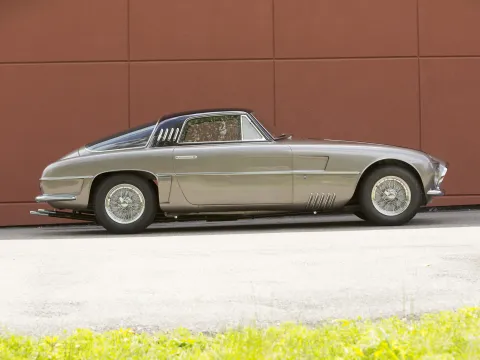
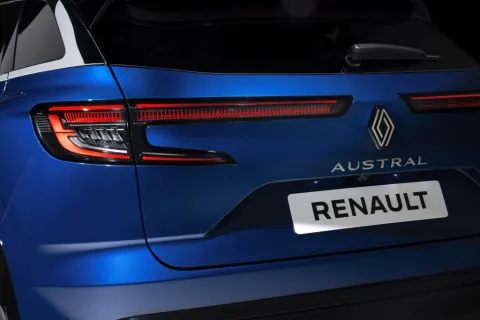
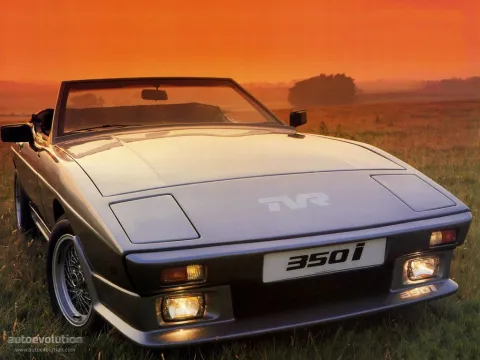
Comparable models from other brands

Audi Nissan Ford Ferrari Renault TVR

About Mercedes-Benz Cabriolet (W111/112)

In 1961, Mercedes-Benz showed an open-top version of the 220 SEb sedan coupe. It was the successor of the 128 convertible, a model that was no longer produced since 1960.

Unlike their predecessors, the W111 and the W112 were planned to be true four-seated vehicles. To get that, the car-maker used the same chassis from the sedan, with the same wheelbase. Unlike the sedan though, it didn't feature the same tailfins. The success of the car showed by the German car-maker, convinced the management that it will be a successful model. And it was.

The headlights and the radiator grille were the same as for the 220 SEb sedan with gasoline engines. On the sides, the longer doors were similar to the coupe versions but the rear was unlike the other two. While the four-door featured tailfins, the coupe had them lowered and the convertible didn't feature them.

Inside, the car featured leather and chromed all over the place. The luxurious interior was meant for rich people with high taste and big expectations. The car was fitted as standard with a 4-speed automatic transmission just to enhance the driving experience.

Under the hood, the W111 cabriolet featured a choice of engines with mechanical fuel injection built by Bosch. The rarest version was the 300 SE with a 3.0-liter inline-six engine with only 708 units produced. The top model featured the 3.5-liter V8 unit, which was produced in 1232 units.

How much power does the Mercedes-Benz Cabriolet (W111/112) have?

The most powerful Mercedes-Benz Cabriolet (W111/112) trim is the 300 SE 3.5L 4AT RWD (200 HP) with 200 hp. The model has 4 trims, starting at 120 hp.

What is the fuel consumption of the Mercedes-Benz Cabriolet (W111/112)?

The most economical Mercedes-Benz Cabriolet (W111/112) trim is the 220 SEb 4MT RWD (120 HP), with a stated combined consumption of 11.2 l/100 km and 267 g CO2 per km.

How quickly does the Mercedes-Benz Cabriolet (W111/112) accelerate from 0 to 100 km/h?

The quickest trim is the 300 SE 3.5L 4AT RWD (200 HP): 0-100 km/h in 9.4 seconds, with a top speed of 204 km/h.

Other Mercedes-Benz models