Skip to content
AD

Mercedes-Benz "Grosser Mercedes" Cabriolet A (W07) (1931 - 1938)

Mercedes-Benz · 2 trims

Mercedes-Benz "Grosser Mercedes" Cabriolet A (W07)

The Mercedes-Benz "Grosser Mercedes" Cabriolet A (W07) (1931 - 1938) is available in 2 trims producing 150 to 200 hp. The fastest trim reaches 159 km/h. The lowest stated fuel consumption is 29.0 l/100 km.

Power
200 hp
0–100
Fuel economy
29.0 l/100 km
Cargo

"Grosser Mercedes" Cabriolet A (W07) Trims

Compare →
Trims and engine versions — Mercedes-Benz "Grosser Mercedes" Cabriolet A (W07)
Trim Fuel Power Torque 0–100 Top speed Fuel economy CO2 Select
770 Petrol 150 hp 150 km/h 29.0 l/100 km 691 g/km
770 Kompressor Petrol 200 hp 159 km/h 30.2 l/100 km

Fuel economy and CO2 follow the stated test cycle. Manufacturer figures; deviations per market and option pack are possible.

Is Mercedes-Benz "Grosser Mercedes" Cabriolet A (W07) a good choice against other models?

Average across every Mercedes-Benz "Grosser Mercedes" Cabriolet A (W07) trim, compared with 117 trims of other cars from the 1928–1934 period.

Is Mercedes-Benz "Grosser Mercedes" Cabriolet A (W07) a good choice against other models?
Measure This model Average Position
Power 175 hp 117 hp
better than 81%
Top speed 155 km/h 131 km/h
better than 78%
Combined consumption 29.6 l/100 km 22.9 l/100 km
better than 9%
CO2 emissions 691 g/km 564 g/km
better than 9%

Percentages show the share of trims from the same period this model beats on that measure. Manufacturer figures.

Not stated by the manufacturer: torque, acceleration 0–100 km/h, cargo volume and unladen weight. Those measures are left out of the comparison.

Comparable models from other brands

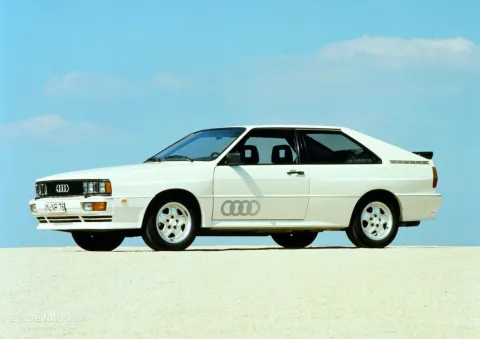
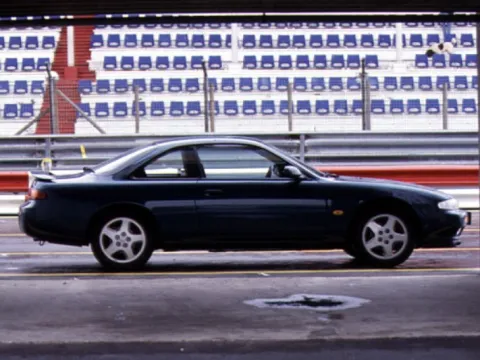
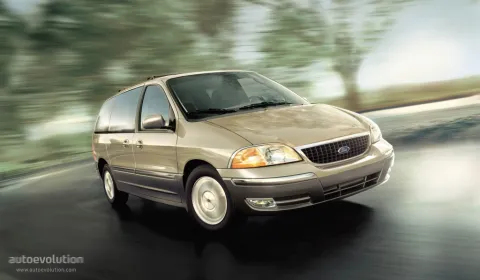
Audi Nissan Ford Ferrari Renault TVR

About Mercedes-Benz "Grosser Mercedes" Cabriolet A (W07)

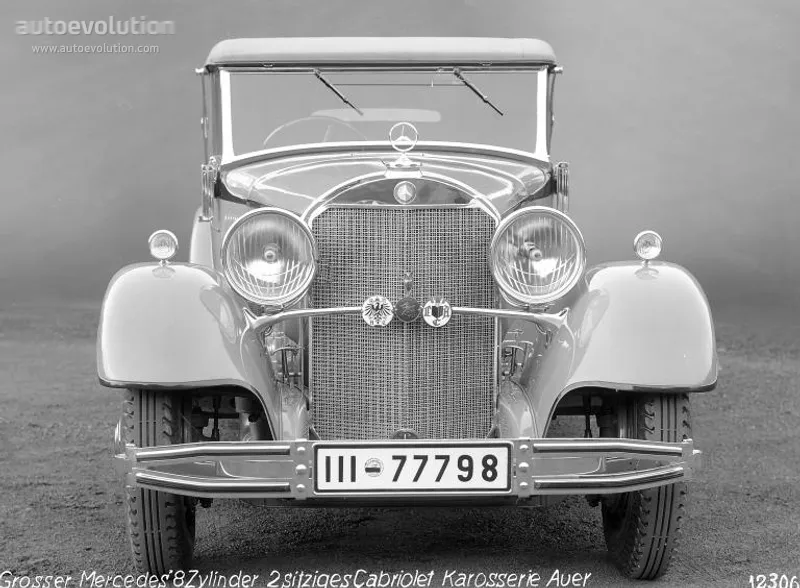
After a two year development, Mercedes-Benz launched the “Grand Mercedes” at the end of 1930. It was the most luxurious vehicle offered by the German car-maker.

The Grosser Mercedes, or Grand Mercedes, W07 was intended to be the ultimate luxury and performance vehicle. The specialized publications from the era recorded that the car was safe to drive even at “breathtaking speeds of over 120 kph” (75 mph). The Grand Mercedes was offered with a supercharged or naturally aspirated engine.

The Cabriolet A was, in fact, a factory-supplied chassis with an engine without the supercharger. That was a rare model since only 13 vehicles without superchargers were built. Among the body assemblers who received bare chassis for completion was the small company Auer, Stuttgart-Bad Cannstatt, with which Daimler had a long history before 1900. Auer designed an unusual cabriolet version for the naturally aspirated engine with two doors and two seats. Behind the doors, two hatches could have been opened to place luggage. In the back, the car featured two spare-wheels on the rear-end of the car. The 17” wheels were fitted with 8.25 x 17 low-pressure tires.

The car was sold by Mercedes-Benz as a bare chassis for the price of RM 29.500, after the RM 3000 reduction for not fitting the engine with a belt-driven supercharger. The chassis was supplied with an engine, a 4-speed manual gearbox, a two-speed transfer box, dashboard, and the windshield. The interior was fitted with individually selected materials.

Since those cabriolet versions were not designed and manufactured by the Mercedes-Benz, they were assigned with the “Cabriolet A” names.

How much power does the Mercedes-Benz "Grosser Mercedes" Cabriolet A (W07) have?

The most powerful Mercedes-Benz "Grosser Mercedes" Cabriolet A (W07) trim is the 770 Kompressor with 200 hp. The model has 2 trims, starting at 150 hp.

What is the fuel consumption of the Mercedes-Benz "Grosser Mercedes" Cabriolet A (W07)?

The most economical Mercedes-Benz "Grosser Mercedes" Cabriolet A (W07) trim is the 770, with a stated combined consumption of 29.0 l/100 km and 691 g CO2 per km.

Other Mercedes-Benz models