Skip to content
AD

BMW 3/15 PS (1929 - 1932)

BMW · 1 trim

BMW 3/15 PS

The BMW 3/15 PS (1929 - 1932) is available in 1 trims producing 15 to 15 hp. The fastest trim reaches 76 km/h. The lowest stated fuel consumption is 6.0 l/100 km.

Power
15 hp
0–100
Fuel economy
6.0 l/100 km
Cargo

3/15 PS Trims

Compare →
Trims and engine versions — BMW 3/15 PS
Trim Fuel Power Torque 0–100 Top speed Fuel economy CO2 Select
0.75 3MT (15 HP) Petrol 15 hp 30 Nm 76 km/h 6.0 l/100 km

Fuel economy and CO2 follow the stated test cycle. Manufacturer figures; deviations per market and option pack are possible.

Is BMW 3/15 PS a good choice against other models?

Average across every BMW 3/15 PS trim, compared with 89 trims of other cars from the 1926–1932 period.

Is BMW 3/15 PS a good choice against other models?
Measure This model Average Position
Power 15 hp 124 hp
better than 0%
Top speed 76 km/h 136 km/h
better than 3%
Combined consumption 6.0 l/100 km 24.5 l/100 km
better than 100%

Percentages show the share of trims from the same period this model beats on that measure. Manufacturer figures.

Not stated by the manufacturer: acceleration 0–100 km/h, co2 emissions and cargo volume. Those measures are left out of the comparison.

Comparable models from other brands

Fiat Renault Ford

About BMW 3/15 PS

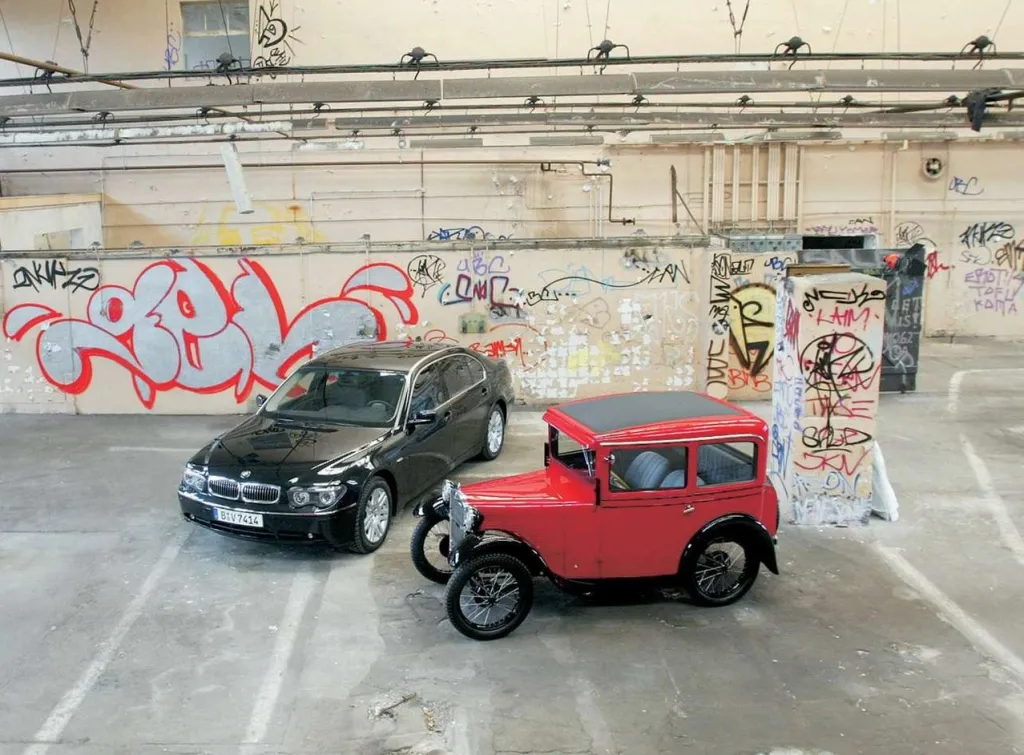
When BMW decided to enter the car industry, it bought the struggled Eisenach car factory in 1928 where the British car Austin 7 was produced under license. One year later, it showed the new model, the BMW 3/15.

The Eisenach car company sold the licensed Austin 7 under the Dixi name for the market. It was more of an assembled car from spare parts imported from the U.K. In 1927 the car was adapted for the European roads, with the left-hand-drive position. This is how the car was found by BMW when it bought the factory and it named it BMW Dixi.

In 1929, BMW installed Bosch dampers on the car and named it 3/15 where 3 was the taxation category and the actual horsepower. The car was available as a coupe, roadster and tourer. Also, some vehicles were sold as chassis to external coachbuilders.

One of the biggest problems of the car was that everything was measured in Imperial units and most workshops had only metric tools. BMW decided to change that and, in 1929, when it started to build the parts, it started to change the fasteners into metric. The first 3/15 was also named as DA1, which meant German Version 1. Further developments followed on the DA2, DA3 and DA4 models.

Under BMW management, the car received four-wheels brakes, unlike the Dixi who had only rear brake wheels. The engine was modified to increase its maximum power output to 18 hp. There was also a sports car named Wartburg, but it was discontinued when the Great Depression started in 1931. BMW discontinued the 3/15 in 1932 when the license with Austin expired.

How much power does the BMW 3/15 PS have?

The most powerful BMW 3/15 PS trim is the 0.75 3MT (15 HP) with 15 hp. The model has 1 trims, starting at 15 hp.

What is the fuel consumption of the BMW 3/15 PS?

The most economical BMW 3/15 PS trim is the 0.75 3MT (15 HP), with a stated combined consumption of 6.0 l/100 km and — g CO2 per km.

Other BMW models

BMW 3/20 PS

1932 - 1934 · 1 trim

Power
20 hp
0–100
Fuel economy
6.5

Petrol

BMW 303

1933 - 1934 · 1 trim

Power
30 hp
0–100
Fuel economy

Petrol

BMW 328

1936 - 1939 · 1 trim

Power
82 hp
0–100
10.5 s
Fuel economy
14.5

Petrol

BMW 326

1936 - 1941 · 1 trim

Power
51 hp
0–100
35.0 s
Fuel economy
12.5

Petrol

BMW 327 Coupe

1938 - 1941 · 1 trim

Power
81 hp
0–100
Fuel economy
10.8

Petrol

BMW 335

1939 - 1941 · 1 trim

Power
90 hp
0–100
Fuel economy

Petrol