Skip to content
AD

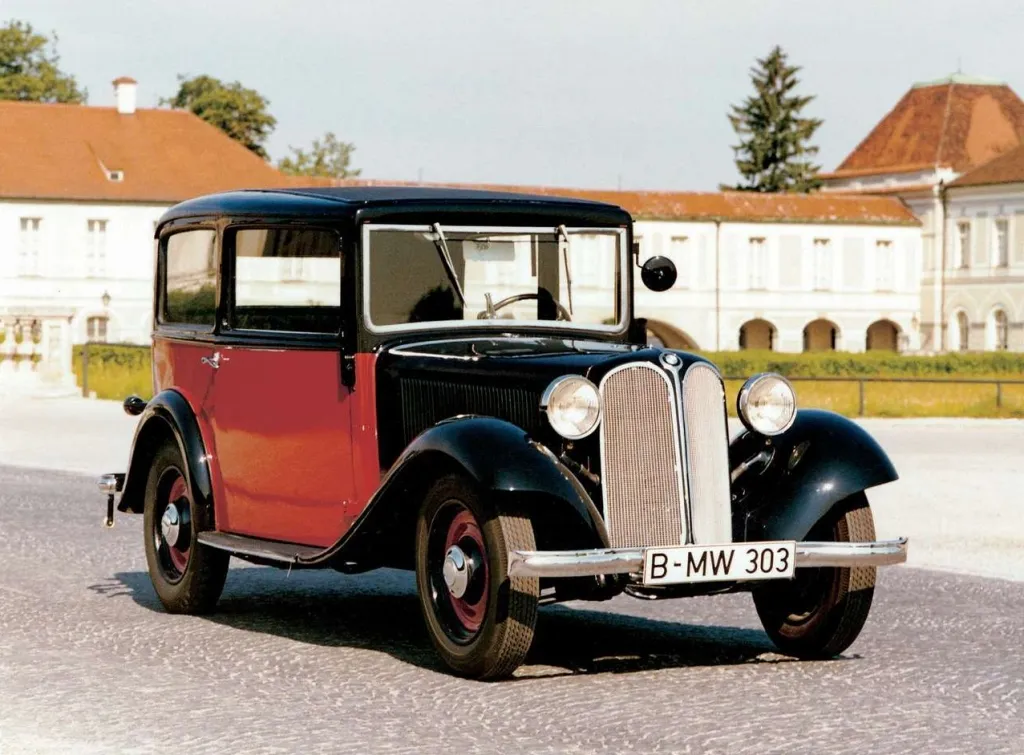
BMW 303 (1933 - 1934)

BMW · 1 trim

BMW 303

The BMW 303 (1933 - 1934) is available in 1 trims producing 30 to 30 hp. The fastest trim reaches 90 km/h.

Power
30 hp
0–100
Fuel economy
Cargo

303 Trims

Compare →
Trims and engine versions — BMW 303
Trim Fuel Power Torque 0–100 Top speed Fuel economy CO2 Select
1.2L 4MT (30 HP) Petrol 30 hp 90 km/h

Fuel economy and CO2 follow the stated test cycle. Manufacturer figures; deviations per market and option pack are possible.

Is BMW 303 a good choice against other models?

Average across every BMW 303 trim, compared with 117 trims of other cars from the 1930–1936 period.

Is BMW 303 a good choice against other models?
Measure This model Average Position
Power 30 hp 110 hp
better than 3%
Top speed 90 km/h 131 km/h
better than 6%
Unladen weight 820 kg 1,628 kg
better than 96%

Percentages show the share of trims from the same period this model beats on that measure. Manufacturer figures.

Not stated by the manufacturer: torque, acceleration 0–100 km/h, combined consumption, co2 emissions and cargo volume. Those measures are left out of the comparison.

Comparable models from other brands

Bentley Citroën Lancia Fiat

About BMW 303

The BMW 303 was the first BMW that featured the “kidney-grille” and the first BMW that featured an inline-six engine. It was produced between 1933 and 1934.

The first BMW was the Dixi 3/15, which was a license after the Austin Seven. The German car-maker modified the engine to produce more power but it was just a step before their first designed and engineered car, the 303. Despite the Great Depression, BMW launched the new 303 in February 1933 with an elegant body style and rounded corners. The 303 was available in four choices: closed sedan, cabriolet, sport-cabriolet with two seats, and chassis. The car was an instant hit and was sold in 2300 units in just two years. By those times standards, it was a success.

At those times, there was normal to buy a chassis from a car-maker and the body from a coachbuilder and, while some worked with Spohn, BMW worked closely with Glaser.

For the closed sedan bodywork, BMW worked with Mercedes-Benz, who helped them create a good quality interior. The instrument panel featured just two dials for the speedometer and the fuel gauge.

The tubular chassis with rear axle and front independent suspension with a transverse leaf spring was features unseen on those times. The light construction and the powerful six-cylinder engine were strong enough to propel the car at decent speeds. The RM 3600 price for the sedan was smaller than the price asked by Mercedes-Benz for the 170 model.

How much power does the BMW 303 have?

The most powerful BMW 303 trim is the 1.2L 4MT (30 HP) with 30 hp. The model has 1 trims, starting at 30 hp.

Other BMW models

BMW 3/20 PS

1932 - 1934 · 1 trim

Power
20 hp
0–100
Fuel economy
6.5

Petrol

BMW 328

1936 - 1939 · 1 trim

Power
82 hp
0–100
10.5 s
Fuel economy
14.5

Petrol

BMW 326

1936 - 1941 · 1 trim

Power
51 hp
0–100
35.0 s
Fuel economy
12.5

Petrol

BMW 3/15 PS

1929 - 1932 · 1 trim

Power
15 hp
0–100
Fuel economy
6.0

Petrol

BMW 327 Coupe

1938 - 1941 · 1 trim

Power
81 hp
0–100
Fuel economy
10.8

Petrol

BMW 335

1939 - 1941 · 1 trim

Power
90 hp
0–100
Fuel economy

Petrol