Skip to content
AD

Mercedes-Benz Typ 500 K Cabriolet B (W29) (1934 - 1936)

Mercedes-Benz · 1 trim

Mercedes-Benz Typ 500 K Cabriolet B (W29)

The Mercedes-Benz Typ 500 K Cabriolet B (W29) (1934 - 1936) is available in 1 trims producing 160 to 160 hp. The fastest trim reaches 159 km/h. The lowest stated fuel consumption is 27.0 l/100 km.

Power
160 hp
0–100
Fuel economy
27.0 l/100 km
Cargo

Typ 500 K Cabriolet B (W29) Trims

Compare →
Trims and engine versions — Mercedes-Benz Typ 500 K Cabriolet B (W29)
Trim Fuel Power Torque 0–100 Top speed Fuel economy CO2 Select
500 Kompressor Petrol 160 hp 159 km/h 27.0 l/100 km 643 g/km

Fuel economy and CO2 follow the stated test cycle. Manufacturer figures; deviations per market and option pack are possible.

Is Mercedes-Benz Typ 500 K Cabriolet B (W29) a good choice against other models?

Average across every Mercedes-Benz Typ 500 K Cabriolet B (W29) trim, compared with 123 trims of other cars from the 1931–1937 period.

Is Mercedes-Benz Typ 500 K Cabriolet B (W29) a good choice against other models?
Measure This model Average Position
Power 160 hp 101 hp
better than 84%
Top speed 159 km/h 128 km/h
better than 83%
Combined consumption 27.0 l/100 km 19.5 l/100 km
better than 23%
CO2 emissions 643 g/km 485 g/km
better than 25%
Unladen weight 2,300 kg 1,577 kg
better than 10%

Percentages show the share of trims from the same period this model beats on that measure. Manufacturer figures.

Not stated by the manufacturer: torque, acceleration 0–100 km/h and cargo volume. Those measures are left out of the comparison.

Comparable models from other brands

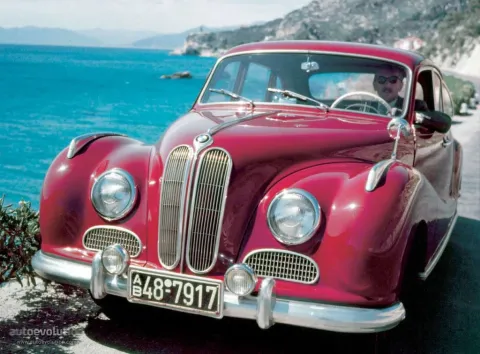
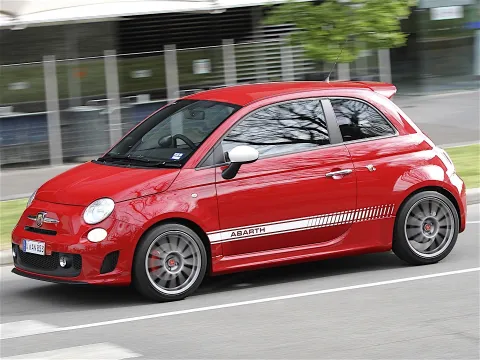
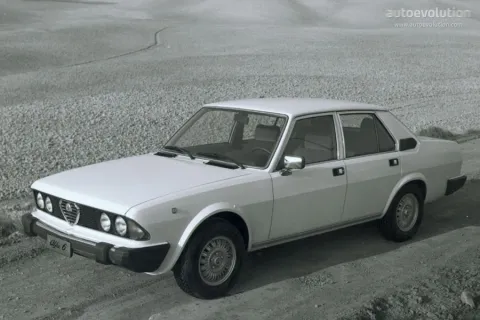
BMW Mazda MG Fiat Alfa Romeo

About Mercedes-Benz Typ 500 K Cabriolet B (W29)

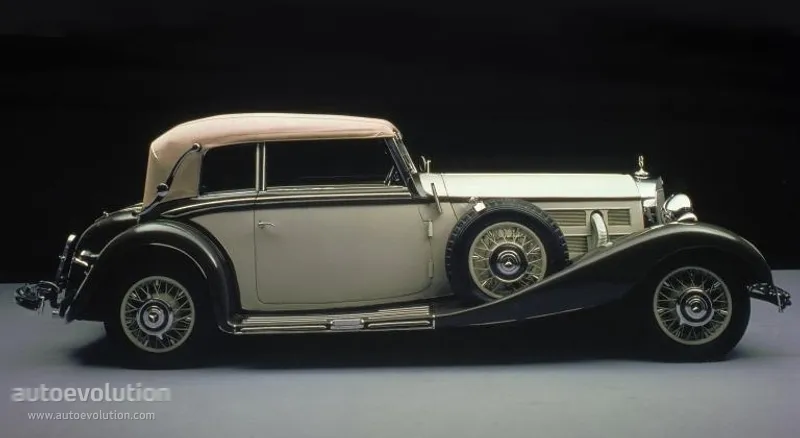
Mercedes-Benz introduced the W29 lineup just before the start of WWII and made it in a few versions, such as the open-top Cabriolet B.

The German automaker was already renowned for its luxurious and powerful vehicles. Even though it wasn't the most successful brand on the race tracks, its production vehicles were highly appreciated for their performance. Moreover, they were praised for their ride quality and, obviously, their luxurious amenities. They were the epitome of grand touring cars, especially in a country where there were no speed limits on the newly-developed Autobahn (highway) system.

Based on the same chassis as the Spezial-Coupe, the Cabriolet B featured was, actually, an open-top version for that. At the front, the carmaker installed its already famous headlights on a curved horizontal slat mounted in front of the radiator, supported by the curved wheel fenders. A particular feature was for the exhausts, which exited on the engine compartment's sides. Even though a bumper was not mandatory at those times, the carmaker added one welded on the chassis' endings. Thanks to the short, tilted windshield, the car offered an aerodynamic shape and a pair of long, front-hinged doors.

The leather-wrapped car interior was carefully crafted to create a luxurious environment. In addition, the wooden dash panel with its center-mounted gauges allowed the driver to constantly monitor the engine's revs, water temperature, oil pressure, and battery charging. The speedometer was the biggest dial among them, but that was not that important. At least not on the Autobahn.

The car's underpinnings were shared with the 500 K Spezial-Coupe, featuring a five-speed manual gearbox with a semi-automatic feature. Thanks to its hydraulic brakes, and independent suspension in all corners, the car offered a comfortable ride even at higher speeds.

How much power does the Mercedes-Benz Typ 500 K Cabriolet B (W29) have?

The most powerful Mercedes-Benz Typ 500 K Cabriolet B (W29) trim is the 500 Kompressor with 160 hp. The model has 1 trims, starting at 160 hp.

What is the fuel consumption of the Mercedes-Benz Typ 500 K Cabriolet B (W29)?

The most economical Mercedes-Benz Typ 500 K Cabriolet B (W29) trim is the 500 Kompressor, with a stated combined consumption of 27.0 l/100 km and 643 g CO2 per km.

Other Mercedes-Benz models