About BMW isetta
The Isetta was the solution to a problem that BMW had in the mid-50s, and in a way, it saved the German brand from extinction.
After WWII, BMW had to build frying pans and pots to survive since its automotive section had severe restrictions due to the brand's involvement in helping the German army during the war. So, the company found a loophole that offered them the possibility to make cars without building cars. And that was the Isetta. A vehicle that could be driven with a motorcycle driving license and also could take two people onboard.
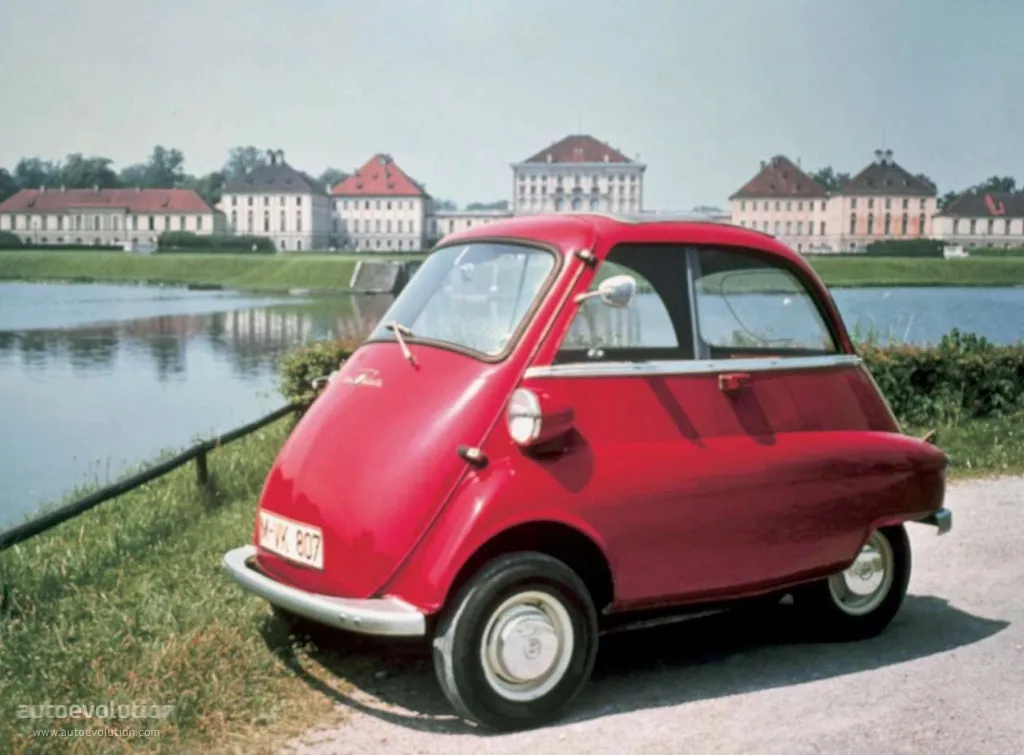
When the term "bubble car" appeared, the Isetta was the epitome of it because that's how it looked. At the front, it featured a large panoramic windscreen mounted on the door. Because to get inside the vehicle, the entire front side of the vehicle was an actual side-hinged door that opened along with the steering wheel. Later models featured the well-known kidney grille, which could open and serve as vents for the cabin. On its sides, the car came fitted with sliding windows for passengers and additional triangular ones. Finally, at the back, the Isetta featured a large, wrap-around windscreen. Since the engine was on the passenger's side, above the rear wheels, there were a few vents on the bodywork that cooled it.
To say that the cabin was minimalist is an understatement. The driver fronted the steering wheel and a tiny instrument cluster that showed only the speedometer and a couple of other warning lights. The lever for the four-speed manual gearbox was on the left, while the pedals were arranged with the steering column passing between the clutch and the brake pedal. A bench seat was all that the interior had to offer in terms of comfort. Still, a large shelf behind it provided some storage area.
The tiny vehicle was powered by a single-cylinder engine with a 300 cc displacement paired with a four-speed manual gearbox. Since the rear axle's track was small, the automaker didn't have to install a differential, which helped the Isetta cope well with slippery conditions.